
























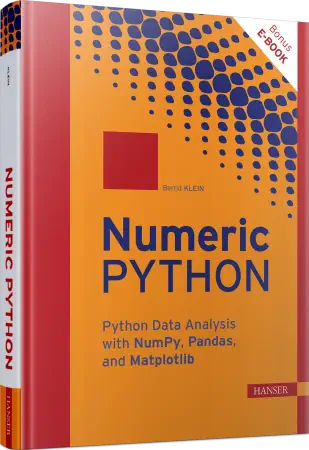
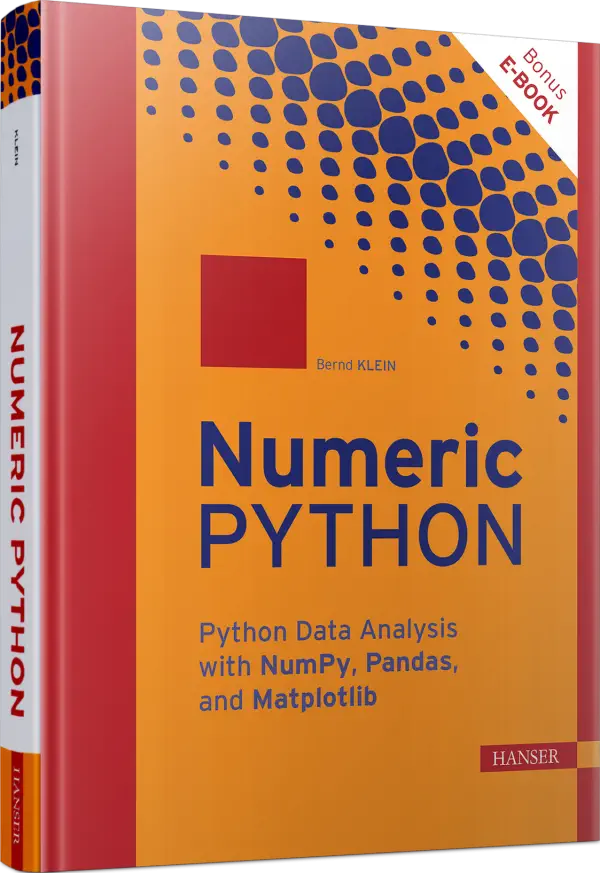
Numeric PYTHON
Python Data Analysis with NumPy, Pandas, and Matplotlib
HANSER Fachbuch |
|
Autor:in |
|
553 Seiten, Softcover |
|
Erschienen |
05/2026 |
978-1-56990-495-4 9781569904954 |
Python for Data Science and Numerical Computing
This book provides a practical introduction to Python for numerical computing, data science, and machine learning. It teaches the essential programming concepts needed to work with real-world data and focuses on the most important scientific Python libraries: NumPy, Matplotlib, and Pandas. Readers learn how to solve numerical problems efficiently, analyze structured datasets, create professional visualizations, and apply Python in practical projects such as image processing and financial analysis. The book combines theoretical foundations with hands-on exercises and examples across 33 chapters.
Numerical Computing with NumPy
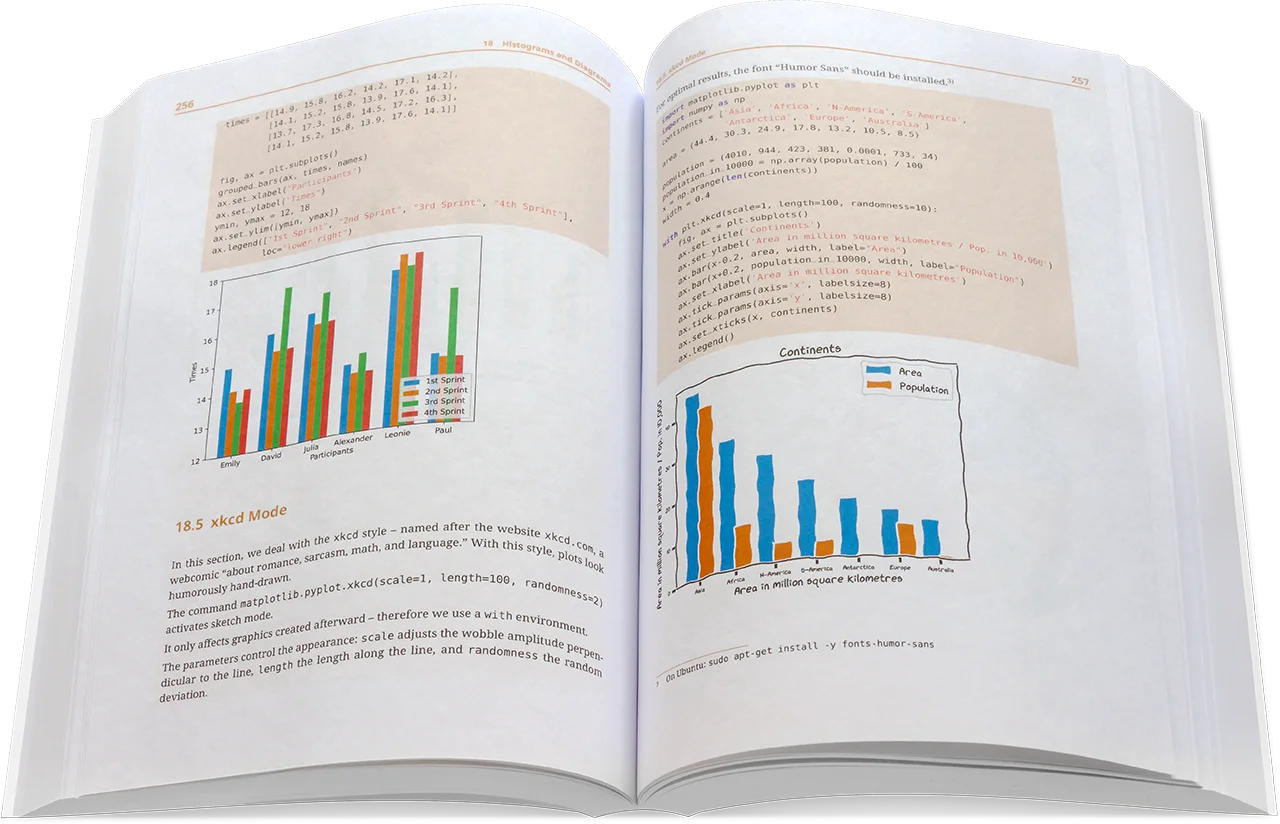
The first part of the book introduces NumPy as the foundation of numerical programming in Python. It explains how NumPy arrays work as the central data structure for efficient numerical computation. Topics include array creation, data types, vectorized operations, broadcasting, universal functions, Boolean masking, statistics, probability, and file handling. Readers learn how to perform fast numerical calculations and manage data efficiently for scientific and machine learning applications.
Data Visualization with Matplotlib
The second part focuses on scientific visualization using Matplotlib. It covers both fundamental plotting concepts and more advanced graphical techniques. Readers learn how to create line charts, bar plots, histograms, subplot layouts, and contour graphics. The section emphasizes how visualizations can be used to explore and communicate data effectively.
Data Analysis with Pandas
The third part introduces data analysis with Pandas. It explains how to work with Series and DataFrames, organize and transform datasets, and perform grouping, pivoting, indexing, and time-series analysis. The book also demonstrates how to import and export Excel, CSV, and JSON files, handle missing data, and create visualizations directly within Pandas.
Practical Applications and Projects
The fourth part presents practical applications that connect the theoretical concepts to real-world problems. Examples include a household budget project, income and expenditure analysis, and an introduction to image processing with Python. These projects help readers understand how numerical computing and data analysis techniques are applied in practice.
Exercises and Solutions
The book concludes with a comprehensive collection of solutions to the exercises included throughout the chapters. Nearly every chapter contains practical exercises designed to reinforce the material and support independent learning.
Aus dem Inhalt
- Numerical operations on multidimensional arrays
- Broadcasting and universal functions (ufuncs)
- Discrete & continuous plots
- Bar charts, histograms, and contour plots
- Series and DataFrames
- Working with Excel, CSV, and JSON files
- Handling missing data (NaN)
- Data visualization techniques
- Image processing funda mentals
- Budget tracking and incomeexpenditure analysis

In this reading sample, you will learn why Python has become one of the most important languages for data science and numerical computing. The author introduces the key libraries NumPy, SciPy, Matplotlib, and Pandas, and explains how they are used for calculations, data analysis, and visualization. You will also discover how Python compares to MATLAB and R, and why its flexibility, open-source ecosystem, and modern tools such as Jupyter Notebooks make it highly popular in scientific and analytical work.
Wer hat's geschrieben?

Der Diplom-Informatiker Bernd Klein ist der Inhaber und Gründer des Schulungsanbieters Bodenseo, der international tätig ist. Bernd Klein kennt sich bestens mit der Theorie und Praxis von Programmiersprachen aus. In der Industrie hat er in zahlreichen Projekten wertvolle praktische Erfahrungen gesammelt, die in seine Kurse einfließen. Seit etwa 4 Jahren hat er sich auf Python konzentriert und sich zum international anerkannten Experten in diesem Gebiet entwickelt. Seine didaktischen Fähigkeiten und seine Sachkompetenz stellt er auch im Internet in den beiden Webseiten www.python-kurs.eu (deutsch) und www.python-course.eu (englisch) unter Beweis.
HANSER Fachbuch |
|
Autor:in |
|
553 Seiten, Softcover |
|
Erschienen |
05/2026 |
978-1-56990-495-4 9781569904954 |